
New high-performance functionalised materials
VALORIZATION OF PRE-INDUSTRIAL FIBROUS WASTE THROUGH ANALYSIS AND VALIDATION OF FIBER LENGTHS SUITABLE FOR PROCESSING IN SPINNING TECHNOLOGIES
REMEFIT
Motivation
The textile industry generates approximately 16 million tons of waste annually in the European Union, of which only 26% is recycled, while the majority (around 75%) ends up in landfills or is incinerated.
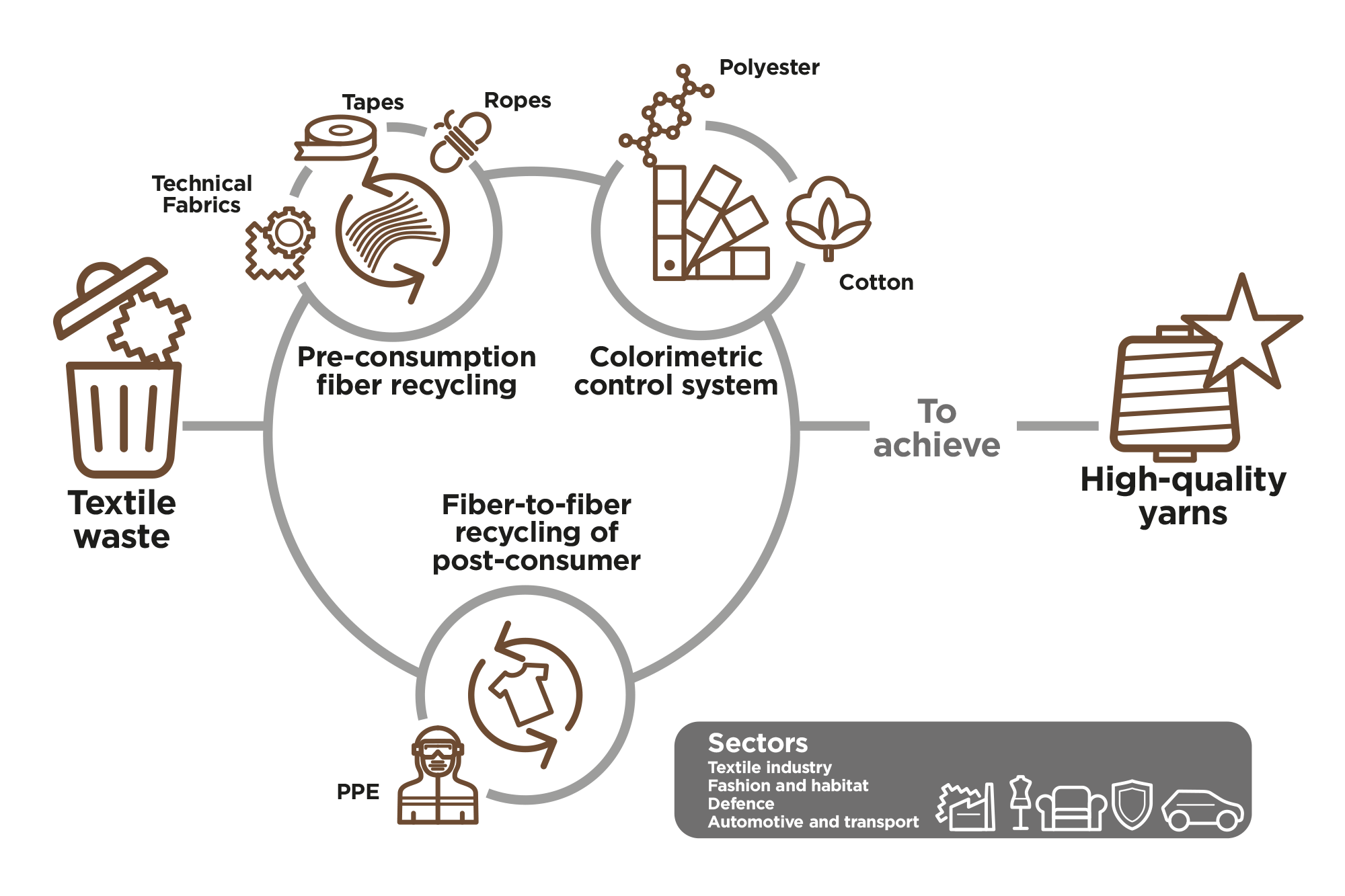
The textile industry is responsible for discharging large quantities of wastewater and solid waste generated at every stage of a garment’s life cycle. Solid textile waste generation is divided into two phases: pre-consumer waste, which includes fibers, fabric scraps, and yarns produced during manufacturing processes, and post-consumer waste, mainly discarded garments.
One of the greatest challenges in textile waste recycling lies in separating multi-component materials, which include blends of natural and synthetic fibers, as well as accessories such as buttons, zippers, and coatings.
Objectives
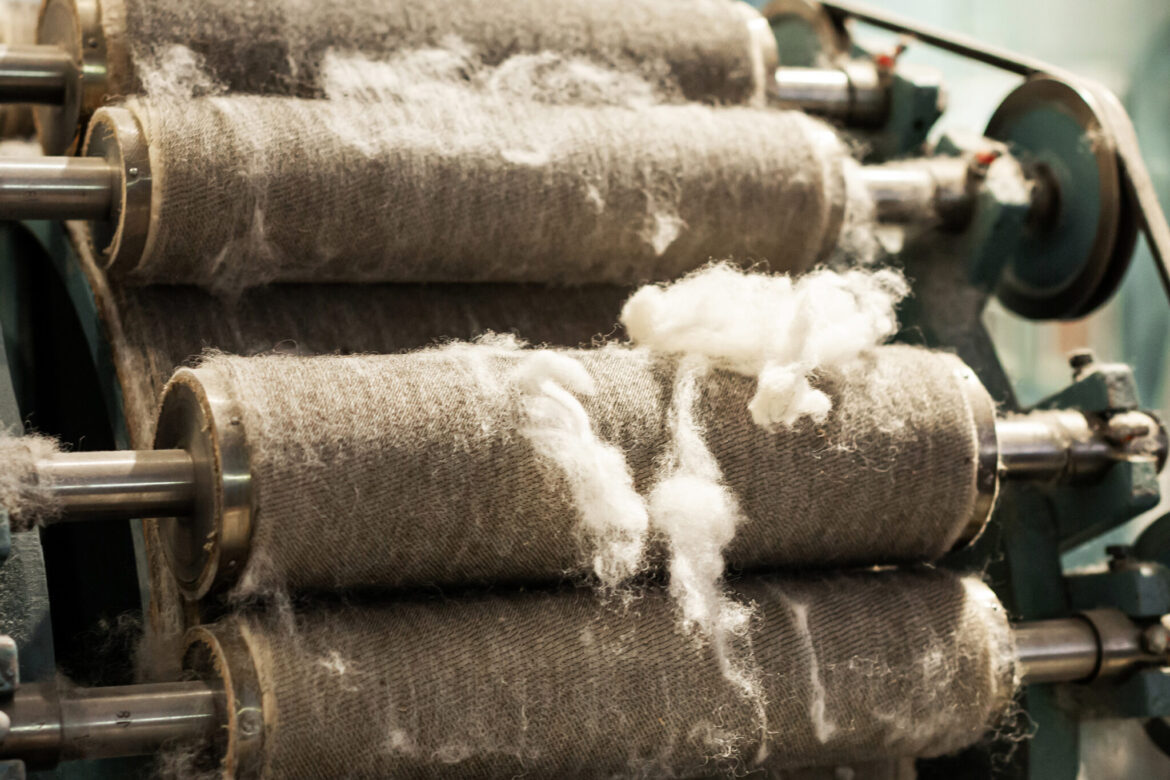
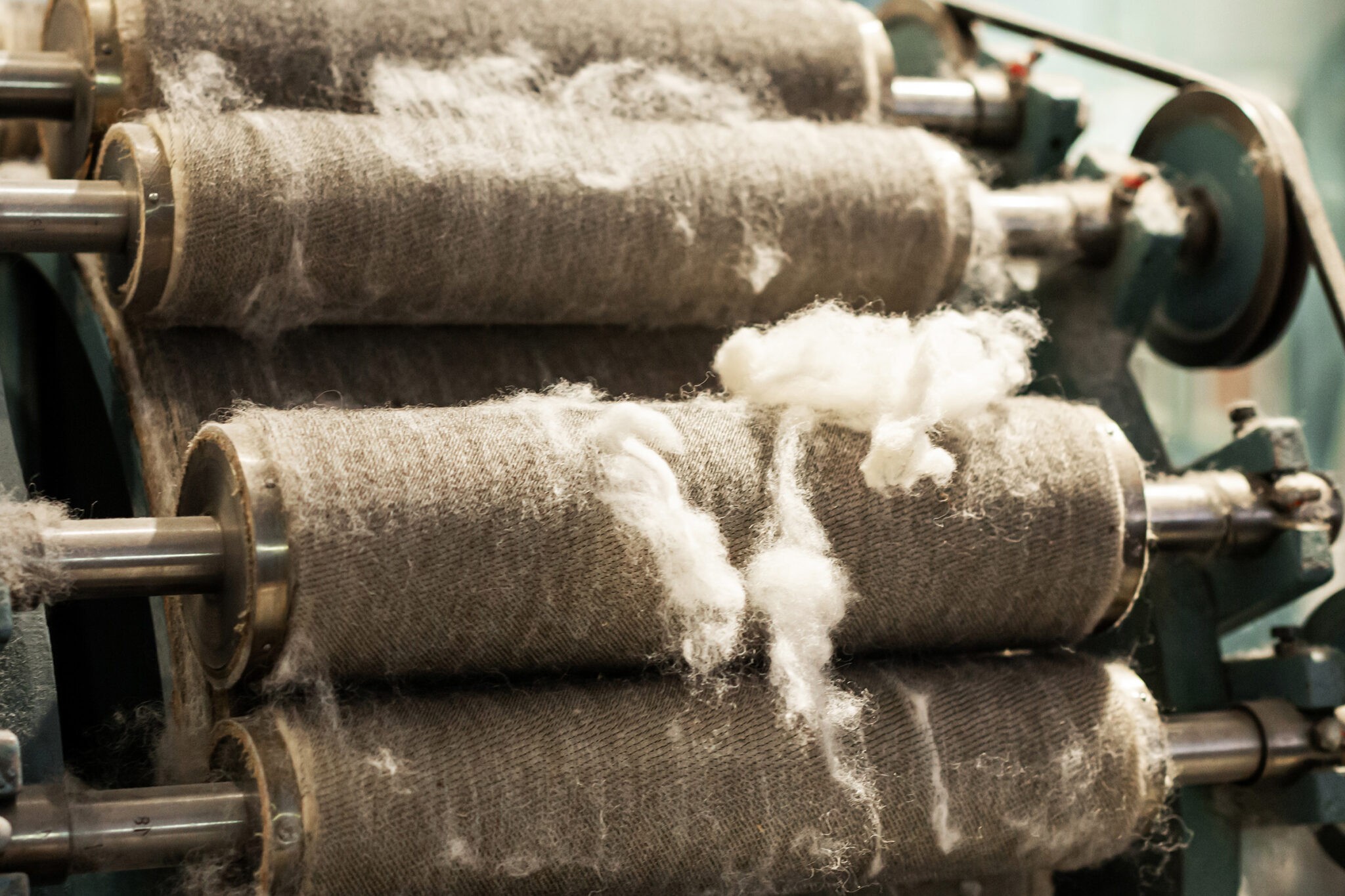
Research and develop textile solutions for complex waste types from both pre- and post-consumer sources that currently pose technological challenges. “Fiber-to-fiber” recycling solutions focus on combining opening, carding, blending, and specific short-fiber spinning processes such as ring spinning and open-end spinning. Fiber-to-fiber recycling is a mechanical recycling approach that works the waste from its fabric stage to its revalorization as usable fiber.
Value and competitive advantage

-
Valorization of complex textile waste through fiber-to-fiber recycling, generating high value-added yarns and nonwovens.
-
Technological capability to maximize recycled fiber length and increase recycled content without losing industrial processability.
-
Differentiation through an integrated circular economy approach, reducing waste, dependence on virgin fibers, and environmental footprint.
-
Mejora de la calidad de las carcasas, fabricando un molde metálico para inyección de plástico.
-
Reducción del coste en la fabricación de grandes tiradas de piezas.
-
Sistemas de entrenamiento fácilmente transportables e inalámbricos.
Expected results

-
Analysis of the current state of fiber-to-fiber recycling technologies and identification of improvements to maximize fiber length.
-
Development of recycled fiber blends by maximizing the percentage of recycled content.
-
Production of high-quality yarns from the different blends developed, with various yarn counts for knitted and woven fabric applications.
-
Valorization of shorter fibers through the production of nonwoven materials.
Grant number: IMAMCA/2025/6
Programme: Plan of non-economic activities 2025
Period of execution: January 2025 – December 2025
Status: Finished
More information: PLAN OF ACTION
Entity: IVACE

Project supported by the Ministry of Innovation, Industry, Commerce and Tourism of the Generalitat Valenciana, through IVACE.
CONTACT US
Do you want to contact us? Click on the button and write to us.
R&D AREAS

New high-performance functionalised materials

Circular economy and sustainability

Advanced manufacturing, smart textiles and digitalisation

High value-added solutions for strategic markets
RELATED PROJECTS


NEWS
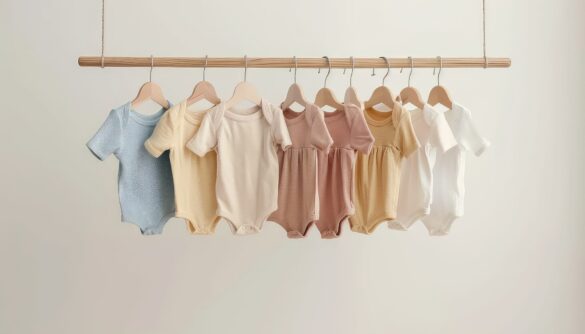
AITEX is present at the Babykid FIMI fair at Feria Valencia from January 26 to 28, presenting tests and certifications for children’s products.

AITEX has attended the Cosmetorium fair in Barcelona once again on October to present its new products for the cosmetic sector.
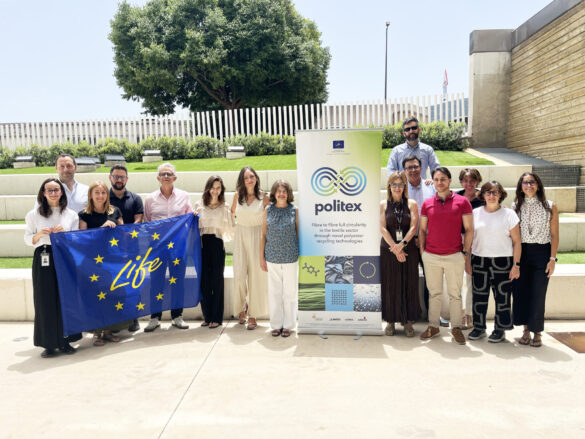
AITEX has hosted the LIFE POLITEX workshop entitled “Closing the textile polyester cycle: challenges and opportunities”, based on promoting sustainable solutions for the management and recycling of textile materials.