
Circular economy and sustainability
FIBRE TO FIBRE FULL CIRCULARITY IN THE TEXTILE SECTOR THROUGH NOVEL POLYESTER RECYCLING TECHNOLOGIES
LIFE POLITEX
Incentives
Despite available recycling technologies across Europe, less than 50% of discarded clothing is collected for potential reuse or recycling, and only 1% is recycled into new clothing. Brands are increasingly transitioning to recycled versions of synthetic fibres, mainly polyester, typically using polyethylene terephthalate (PET) bottles. However, to truly establish circular economies in the textile industry, converting textile waste back into new textiles is imperative.
LIFE POLITEX represents a pioneering effort to become the first industrial pilot plant for comprehensive fibre-to-fibre recycling technology. This initiative seeks to demonstrate complete closed circularity of polyester within the textile sector, transforming processed textile waste into new polyester fibres in a single industrial process.
Objectives
The project aims to address the significant problems of textile waste generation and accumulation in landfills or incineration, driven by the fast fashion industry. The current system of textile production, distribution, and use operates in an almost entirely linear fashion. Coupled with the concept of fast fashion, this has led to significant problems of textile waste generation and accumulation in landfills or incineration.
Expected results

The LIFE POLITEX project aims to establish the first industrial pilot plant for comprehensive fibre-to-fibre recycling technology, showcasing the potential for a circular economy in the textile industry. The project aims to achieve closed circularity by implementing a comprehensive fibre-to-fibre recycling technology through the following key steps:
-
Collection and Sorting: The project collects textile waste, including polyester-based materials, from various sources.
-
Mechanical Recycling: The collected waste undergoes mechanical recycling.
-
Chemical Depolymerization: The rPET flakes are further treated using chemical depolymerization.
-
Polymerization and Spinning: The recovered monomers are then polymerized to create new polyester.
-
Integration into Textile Production.
-
End-of-Life Recycling: At the end of their life cycle, these textile products can be collected and recycled again, closing the loop.
ECOSYSTEX member
LIFE POLITEX is a member project of ECOSYSTEX (the European Community of Practice for a Sustainable Textile Ecosystem), the leading collaborative platform accelerating the green and digital transition of the textile industry.
Visual materials
Grant number: 101148221
Programme: Programme for the Environment and Climate Action (LIFE)
Period of execution: June 2024 – November 2027
Status: In progress
Entity: European Union
This project has received funding from the LIFE Programme (LIFE2027), under Grant Agreement number 101074372.
The contents and opinions expressed are the sole responsibility of the author(s) and can in no way be taken to reflect the views of the European Union or the European Climate, Infrastructure and Environment Executive Agency (CINEA). Neither the European Union nor CINEA can be held responsible for them.
CONTACT US
Do you want to contact us? Click on the button and write to us.
R&D AREAS

New high-performance functionalised materials

Circular economy and sustainability

Advanced manufacturing, smart textiles and digitalisation

High value-added solutions for strategic markets
RELATED PROJECTS


NEWS
AITEX is present at the Babykid FIMI fair at Feria Valencia from January 26 to 28, presenting tests and certifications for children’s products.

AITEX has attended the Cosmetorium fair in Barcelona once again on October to present its new products for the cosmetic sector.
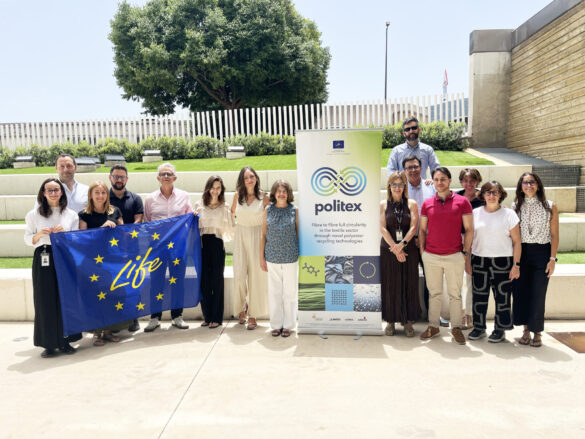
AITEX has hosted the LIFE POLITEX workshop entitled “Closing the textile polyester cycle: challenges and opportunities”, based on promoting sustainable solutions for the management and recycling of textile materials.