
Circular economy and sustainability
VALORIZATION OF WWTP SLUDGE AND BIOMASS RELATED TO DANA TO ENSURE WATER REUSE THROUGH CARBOCATALYTIC OZONATION
BIO3CAT
Motivation
The Valencian Community suffers from extreme water stress, which forces the use of non-conventional resources. However, reuse is limited by insufficient infrastructure and emerging contaminants that current treatments cannot eliminate. Only a small portion of treated water is reused despite its high additional potential. For this reason, the BIO3CAT project proposes incorporating an advanced quaternary treatment that significantly increases water quality and reuse rates. This need is reinforced by new regulatory requirements, such as Royal Decree 1085/2024 and the new Directive (EU) 2024/3019 on urban wastewater, which will mandate the removal of microcontaminants under the principle of Extended Producer Responsibility. At the same time, BIO3CAT aims to valorize two problematic wastes—WWTP sludge and biomass generated by DANA—by transforming them into carbocatalysts for advanced oxidation processes, closing a circular economy loop and reducing environmental and health impacts.
Objectives
The scientific objective of this project is to investigate the physicochemical mechanisms involved in the removal of emerging contaminants, microcontaminants, and resistant microorganisms through carbocatalytic ozonation processes, using catalysts developed from WWTP sludge and plant biomass residues associated with DANA. This objective includes studying oxidation pathways, the formation of disinfection by-products, reaction kinetics, and evaluating the efficiency and selectivity of the process under different operating conditions.
Regarding the technological objective of BIO3CAT, a quaternary water treatment system based on carbocatalytic ozonation will be developed, scaled, and validated, optimized for application in urban wastewater, industrial wastewater (textile and cosmetics), and reject streams generated in Drinking Water Treatment Plants (DWTP). This system will be designed to maximize contaminant removal, ensure microbiological disinfection, and enable the reuse of treated water, contributing to sustainable water resource management and the valorization of solid waste.
Expected results

-
Developing metal-free carbocatalysts obtained from WWTP sludge and biomass related to DANA, capable of removing emerging and persistent contaminants, disinfecting resistant microorganisms, and minimizing the formation of disinfection by-products.
-
Reducing wastewater pollution and improving water quality to help prevent waterborne diseases.
-
Obtaining regenerated water for incorporation into industrial processes in both textile and cosmetic sectors, reducing conventional water consumption, improving water-use efficiency, lowering operational costs, and increasing competitiveness.
-
Ensuring scalability and applicability of the developed technology.
-
Promoting collaboration between industry and researchers to develop integrated and sustainable solutions.
-
Improving water quality by eliminating emerging contaminants (Directive (EU) 2020/2184).
-
Complying with Directive (EU) 2024/3019 by adapting to new requirements for urban wastewater treatment.
Grant number: INNEST/2025/287
Programme: Strategic Cooperation Projects Program
Period of execution: November 2025 – December 2027
Status: In progress
Entity: Valencian Innovation Agency (IVACE+i Innovation)

This project is supported by the Valencian Innovation Agency (AVI) (IVACE+i Innovation) and co-financed by the European Union through the European Regional Development Fund (ERDF) Program of the Comunitat Valenciana 2021–2027.
CONTACT US
Do you want to contact us? Click on the button and write to us.
R&D AREAS

New high-performance functionalised materials

Circular economy and sustainability

Advanced manufacturing, smart textiles and digitalisation

High value-added solutions for strategic markets
RELATED PROJECTS


NEWS

AITEX is present at the Babykid FIMI fair at Feria Valencia from January 26 to 28, presenting tests and certifications for children’s products.

AITEX has attended the Cosmetorium fair in Barcelona once again on October to present its new products for the cosmetic sector.
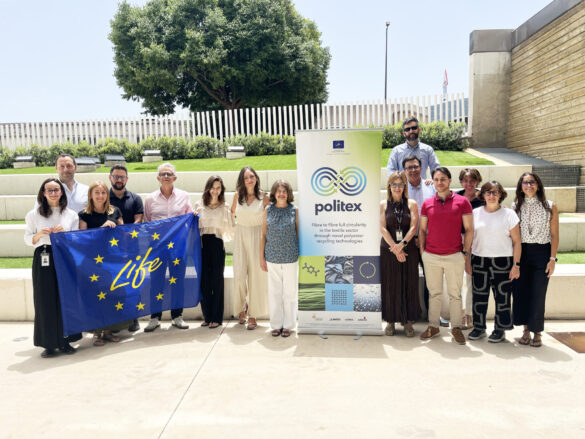
AITEX has hosted the LIFE POLITEX workshop entitled “Closing the textile polyester cycle: challenges and opportunities”, based on promoting sustainable solutions for the management and recycling of textile materials.