
COSMETIC STRIP PATCH TEST
REQUEST MORE INFORMATION
COSMETIC STRIP PATCH TEST
REQUEST MORE INFORMATION
Dermatological assessment

Challenging skin
conditions

Support for
cosmetic claims
WHAT IS A STRIP PATCH TEST?
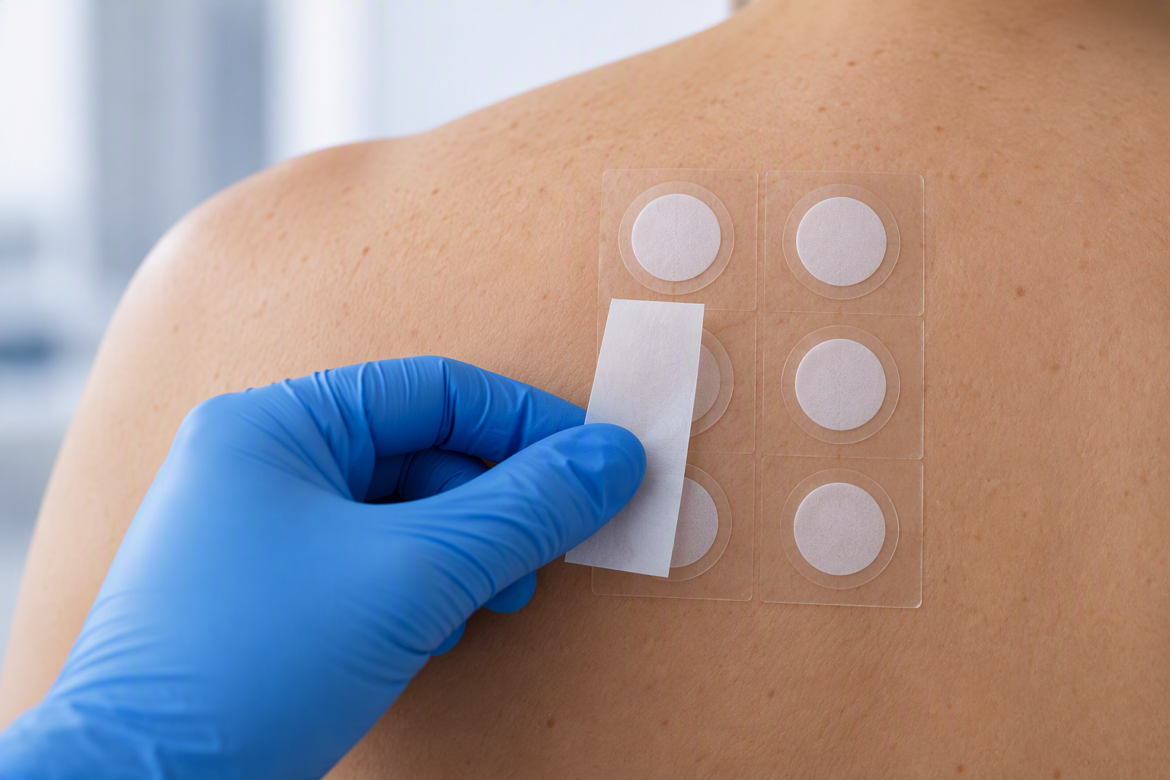
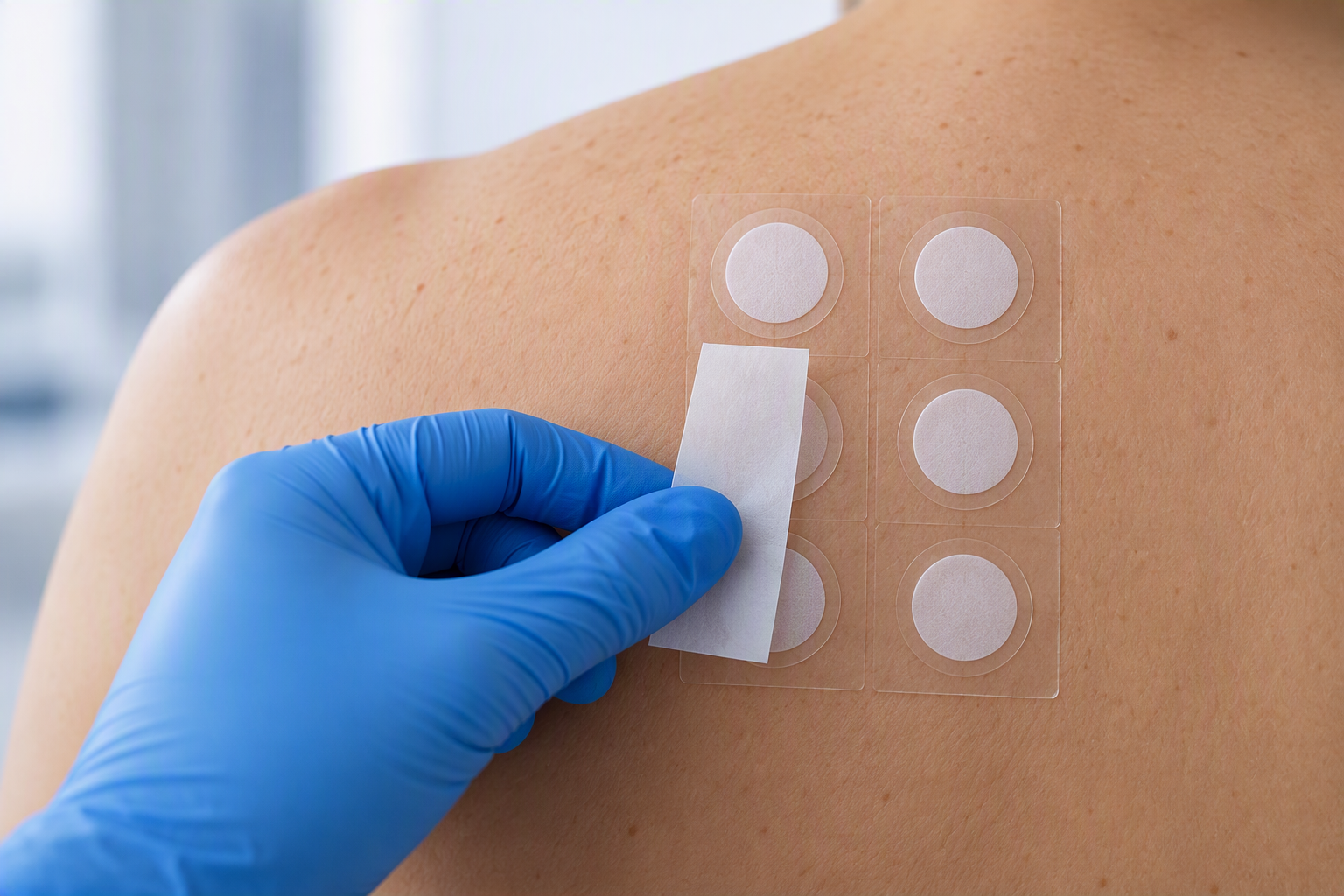
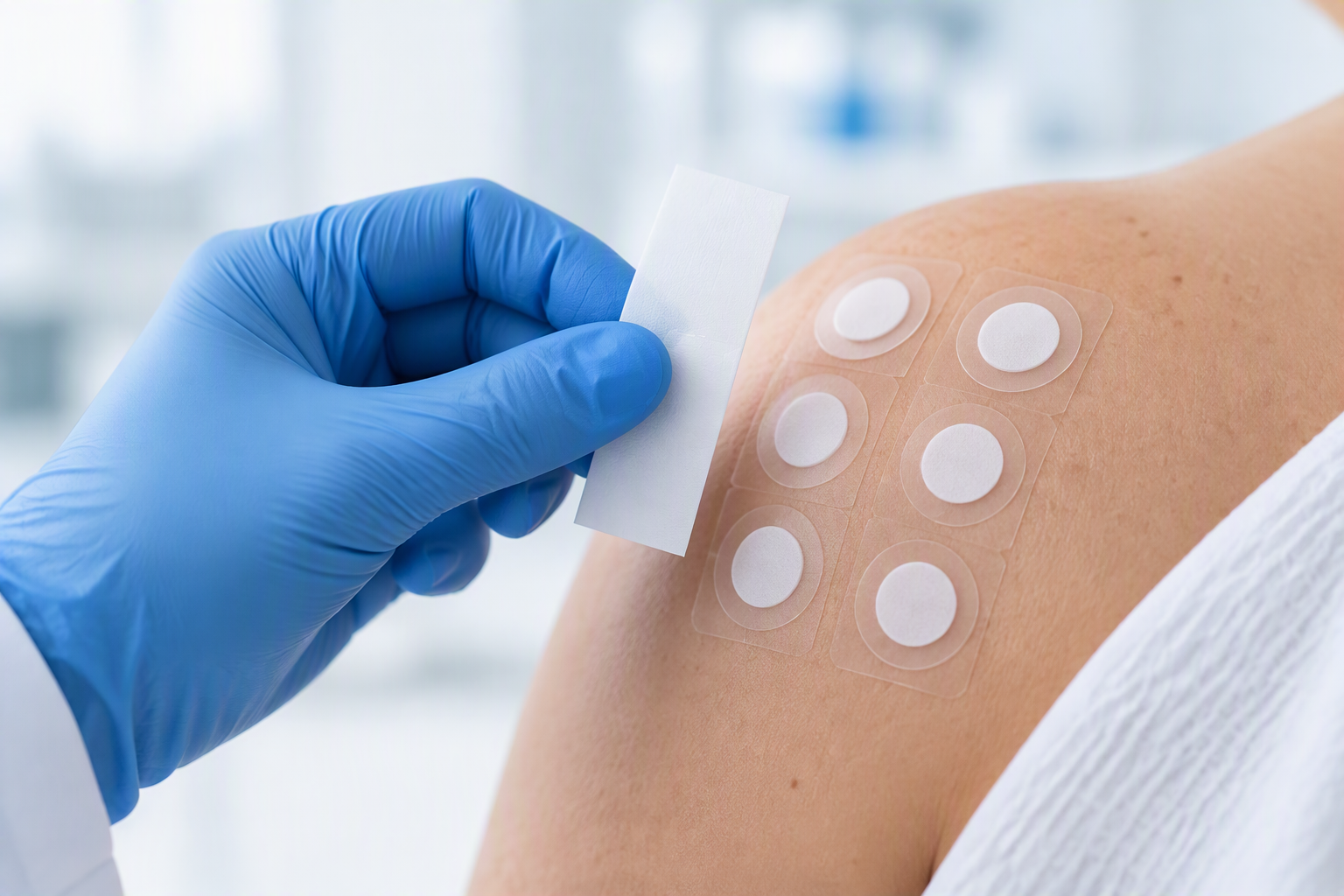
The Strip Patch Test is a variant of the Patch Test that includes a preliminary tape-stripping step. The successive application and removal of adhesive strips partially removes the stratum corneum, altering the skin barrier in a controlled manner and increasing skin permeability. Once the test area has been prepared, the product is applied under occlusion following a procedure similar to that used for the Patch Test. This makes it possible to assess the irritant potential of the formulation under more stringent conditions than those of a conventional test.
Potential reactions are assessed through dermatological evaluation, supporting claims such as “dermatologically tested” and providing additional evidence under more demanding conditions. This approach is particularly relevant to formulations intended for sensitive skin, as well as products whose irritation profile requires more in-depth assessment before launch.
WHY CARRY OUT A STRIP PATCH TEST?

Demanding conditions
Assesses the product on skin whose barrier has been altered in a controlled manner.

Sensitive skin
Provides relevant information for formulations intended for sensitive or compromised skin.

Additional evidence
Complements Patch Test results with a more stringent assessment.

Dermatological claims
Provides technical support for claims such as “dermatologically tested”.

Confidence
Strengthens product credibility among consumers and distributors.
WHICH PRODUCTS CAN BE ASSESSED?
Products for sensitive skin
Dermocosmetics
Facial and body emulsions
Cosmetics for children
Products for atopic or reactive skin
Natural cosmetics
HOW IS THE TEST CARRIED OUT?

Protocol definition
The study design is established according to the product characteristics, target skin type and assessment objectives.

Skin preparation
Tape stripping is performed to partially remove the stratum corneum and alter the skin barrier in a controlled manner.

Application under occlusion
The product is applied to the prepared area using occlusive adhesive patches, following a procedure equivalent to that used for the Patch Test.

Dermatological assessment
After the patch is removed, the results are read and potential skin reactions are clinically assessed.

Technical report
The results obtained are documented and conclusions are drawn regarding product tolerance.
Why choose AITEX for your Strip Patch Test studies?
RIGOROUS DERMATOLOGICAL ASSESSMENT
The skin tolerance studies carried out by AITEX include a dermatological assessment. This allows the observed responses to be interpreted objectively and according to clinical criteria, and enables the product’s behaviour on skin with an altered barrier to be assessed accurately.
This assessment is particularly relevant to the Strip Patch Test because the test conditions increase skin sensitivity. Skin signs such as erythema, oedema and dryness must therefore be assessed in detail, distinguishing between mild reactions and responses of irritant significance.
The result is robust, reliable evidence that supports the development team’s technical decisions and lends credibility to product claims.
PROTOCOLS TAILORED TO THE PRODUCT PROFILE
Each formulation has a different profile. We therefore design the study taking into account the product composition, directions for use, target audience and the level of stringency required for the assessment.
This flexibility makes it possible to choose between a conventional Patch Test and a Strip Patch Test, or to combine both when a more comprehensive characterisation of skin tolerance is required. This is particularly useful for formulations containing potentially sensitising or irritating ingredients, or for products intended for compromised skin.
Our team supports clients from the protocol definition stage and advises them on the approach best suited to their technical, regulatory and communication objectives.


EXPERTISE AND COMPREHENSIVE SERVICES FOR THE COSMETICS INDUSTRY
AITEX assesses the safety and skin compatibility of different categories of cosmetic products, including formulations for sensitive, atopic or reactive skin.
The study can also be complemented by other tolerance, safety, efficacy and microbiological control tests. This provides the company with comprehensive support throughout product development, validation and marketing. Working with a single point of contact simplifies study management, shortens lead times and facilitates access to all the technical documentation required for the product information file.
FAQS ABOUT THE STRIP PATCH TEST
What is a Strip Patch Test?
It is a variant of the Patch Test in which the skin barrier is altered in a controlled manner by tape stripping before the product is applied, in order to assess tolerance under more demanding conditions.
What is the difference between a Patch Test and a Strip Patch Test?
The Patch Test applies the product to intact skin. The Strip Patch Test includes a preliminary step in which the stratum corneum is partially removed, increasing skin permeability and making the assessment more stringent.
What does tape stripping involve?
It involves the successive application and removal of adhesive strips from the test area to partially remove the stratum corneum and alter the skin barrier in a controlled manner.
For which products is this test recommended?
It is particularly useful for formulations intended for sensitive or compromised skin and for products whose irritation profile requires more in-depth assessment.
Can it support dermatological claims?
Yes. As the study includes a dermatological assessment, the results can provide technical support for claims such as “dermatologically tested”.
What types of reactions are assessed?
Skin signs observed in the test area, such as erythema, oedema, dryness or desquamation, are assessed using standardised scales.
Can it be combined with other tolerance tests?
Yes. It can be used alongside the Patch Test, Open Test / ROAT or other studies to obtain a more comprehensive characterisation of the product’s skin tolerance.
REQUEST MORE
INFORMATION
If you would like further information, please complete and submit the form and we will get in touch with you