

Circular economy and sustainability
DIAGNOSIS, IDENTIFICATION AND REMOVAL OF EMERGING CONTAMINANTS IN WATER
REMERGE
Motivation
Recent regulatory pressure in the EU requires the monitoring of emerging contaminants (ECs) in wastewater treatment plants (WWTPs) and anticipates the implementation of quaternary treatment processes under EU Directive 2024/3019, known as TARU. This has a significant impact on the textile and cosmetics industries, which generate large amounts of PFAS, surfactants and microplastics in their industrial wastewater, and which compete and interfere with both analytical detection and treatment processes. These compounds, addressed in the project, have a negative impact on human health and ecosystems and may ultimately be released into the environment due to the limited removal efficiency of both urban and industrial wastewater treatment plants. Several regulatory instruments, such as municipal ordinances in the Valencian Region, are already preparing for the implementation of this directive and have limited the concentration of surfactants in discharges to 6 mg/L, due to the operational problems they cause in WWTPs. These threshold values, which are significantly higher than those typically reported by industries such as textiles, cosmetics or detergents, highlight the need to address the treatment of emerging contaminants at source. This requires proposing prevention and removal strategies directly within industrial facilities, thereby preventing their discharge into wastewater treatment plants.

Objectives
The general objective of the project is to diagnose the generation of emerging contaminants (PFAS, microplastics, surfactants and others) in different industries, using different analytical techniques (from basic ones such as kits to more advanced ones such as HPLC). Likewise, research will be carried out on various technologies for the removal of these contaminants in water streams and wastewater treatment sludge: heterogeneous catalysis for PFAS removal, vermicomposting for microplastics removal, or advanced ozone treatment for surfactant removal, among others.
Expected results

-
Development and validation of analytical methodologies for the identification and quantification of key emerging contaminants in the textile industry.
-
Quantification of the effectiveness of advanced treatment technologies, such as heterogeneous catalysis, MBR/AnMBR, BMP and vermicomposting, achieving significant reductions of emerging contaminants and aiming to exceed 80% removal efficiency, in line with the requirements set out in the directive for wastewater treatment plants.
-
Development of a validated technical framework for the control of emerging contaminants, aligned with EU Directive 2024/3019, facilitating the implementation of mitigation and removal technologies for the textile and cosmetics industries.
Grant number: PENDING
Programme: Plan of non-economic activities 2026
Period of execution: January 2026 – December 2026
Status: In progress
More information: PLAN OF ACTION
Entity: IVACE

Project supported by the Ministry of Innovation, Industry, Commerce and Tourism of the Generalitat Valenciana, through IVACE.
CONTACT US
Do you want to contact us? Click on the button and write to us.
R&D AREAS

New high-performance functionalised materials

Circular economy and sustainability

Advanced manufacturing, smart textiles and digitalisation

High value-added solutions for strategic markets
RELATED PROJECTS


NEWS

AITEX is present at the Babykid FIMI fair at Feria Valencia from January 26 to 28, presenting tests and certifications for children’s products.

AITEX has attended the Cosmetorium fair in Barcelona once again on October to present its new products for the cosmetic sector.
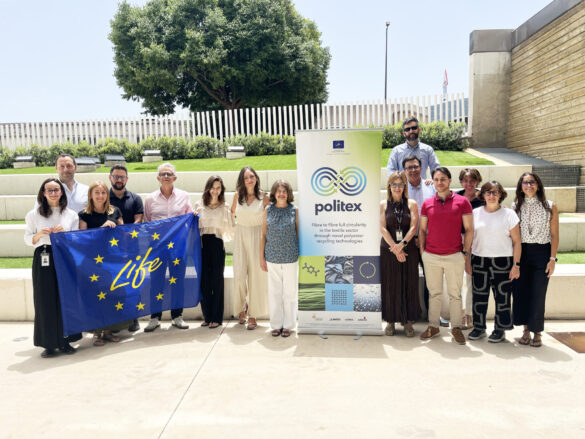
AITEX has hosted the LIFE POLITEX workshop entitled “Closing the textile polyester cycle: challenges and opportunities”, based on promoting sustainable solutions for the management and recycling of textile materials.