

Circular economy and sustainability
EVALUATION, CONTROL, AND MITIGATION OF THE IMPACT OF MICROPLASTICS IN WATER TREATMENT SYSTEMS AND INDUSTRIAL PROCESSES
iMPact
Motivation
Plastics, as they degrade in the atmosphere, water bodies, and soils, generate microplastics (MPs) that disperse widely and interact with organisms and other substances. In agricultural systems, MPs enter through sludge and contaminated water, potentially becoming part of the internal transport of plants and reaching roots, stems, leaves, and fruits, which contaminates food and increases human and animal exposure. This exposure poses serious and still poorly understood risks, including irreversible effects on health and the environment. Among the hazards are the release of chemical additives, the presence of microorganisms on plastic surfaces, and the possible cellular internalization of fragments through ingestion, inhalation, or dermal contact. Faced with this issue, standardized methods are needed to identify MPs and effective strategies to mitigate their discharge and accumulation. The assessment of combined toxicity and ecosystem risks remains a critical area that demands more robust data.

Objectives
The objective of the IMPACT project is to determine, characterize, and mitigate the presence of MPs throughout the entire water cycle, with special attention to their textile origin, by investigating safe and sustainable alternatives in manufacturing processes that reduce MP release, developing and implementing novel detection techniques, studying the scaling and toxicological impact of safer alternatives, and validating their implementation in the industrial sector. All of this aims to protect human, animal, and environmental health against the adverse effects caused by MP exposure through water and sludge.
Expected results

-
Implementation of high-resolution analytical techniques (such as LDIR and µ-Raman).
-
Toxicological evaluation of compounds associated with MPs.
-
Development of emerging and sustainable remediation technologies such as vermicomposting.
-
Minimization of MP emissions at the source, all within a validated and transferable methodological framework.
-
Exploration of sustainable solutions in textile processes with immediate industrial application potential, aligned with European sustainability and circular economy policies.
Grant number: INNEST/2025/296
Programme: Strategic Cooperation Projects Program
Period of execution: November 2025 – December 2027
Status: In progress
Entity: Valencian Innovation Agency (IVACE+i Innovation)

This project is supported by the Valencian Innovation Agency (AVI) (IVACE+i Innovation) and co-financed by the European Union through the European Regional Development Fund (ERDF) Program of the Comunitat Valenciana 2021–2027.
CONTACT US
Do you want to contact us? Click on the button and write to us.
R&D AREAS

New high-performance functionalised materials

Circular economy and sustainability

Advanced manufacturing, smart textiles and digitalisation

High value-added solutions for strategic markets
RELATED PROJECTS


NEWS

AITEX is present at the Babykid FIMI fair at Feria Valencia from January 26 to 28, presenting tests and certifications for children’s products.

AITEX has attended the Cosmetorium fair in Barcelona once again on October to present its new products for the cosmetic sector.
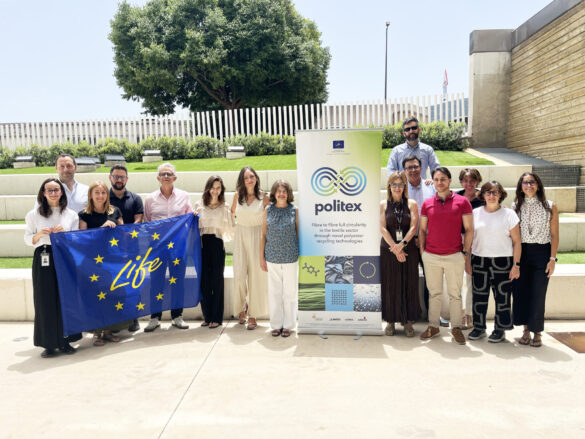
AITEX has hosted the LIFE POLITEX workshop entitled “Closing the textile polyester cycle: challenges and opportunities”, based on promoting sustainable solutions for the management and recycling of textile materials.