
Circular economy and sustainability
CHEMICAL RECYCLING OF POST-CONSUMER TEXTILE WASTE
CHEMUP 2025
Motivation
The textile industry is a key global sector, valued at nearly €1.3 trillion and providing employment for over 300 million people. Over the past 20 years, fiber production has doubled and is expected to continue growing. However, the current model, based on a linear approach and driven by “fast fashion”, has led to major issues such as increasing textile waste, significant environmental impact, and reliance on resources like polyester. Without change, these problems could grow by 50% by 2030. In Spain alone, textile waste amounts to 1,100,000 tons per year.
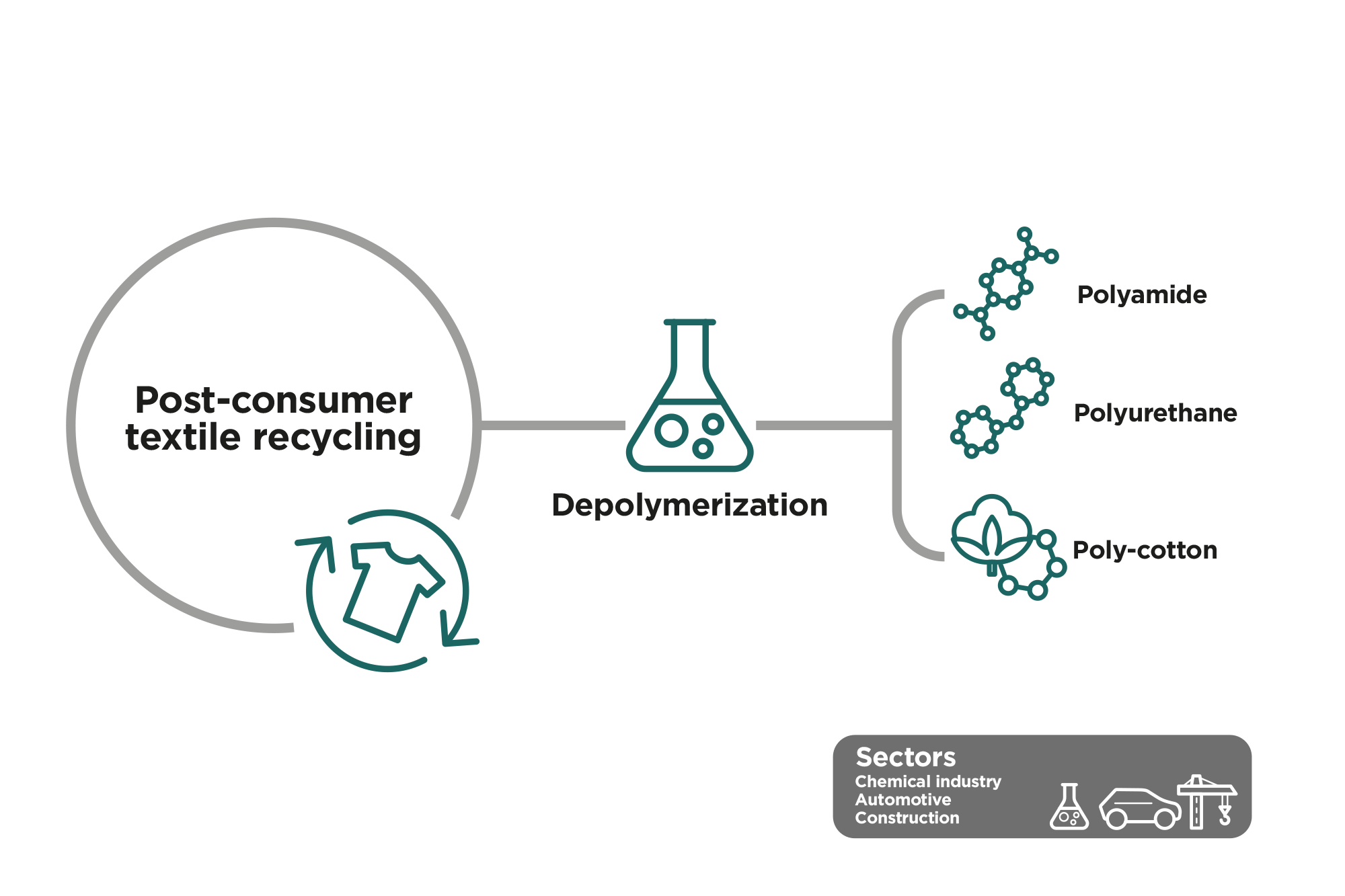
AITEX, with experience in projects like CHEMUP and its successors, has conducted research on the chemical recycling of polyester (N9) and cotton (N4). Within the CHEMUP 2025 project, efforts will focus on optimizing glycolysis and polymerization processes for blends of polyester and cotton textiles (N6), as well as post-consumer polyester textiles, to obtain polyester-polyol glycols for polyurethane development. Additionally, the chemical recycling of other materials such as polyamides and polyurethanes (N3) will be studied.
Objectives
The main objective of the CHEMUP 2025 project is to develop and optimize advanced chemical recycling processes for polymeric materials such as polyamides, polyesters and polyurethanes.
Value and competitive advantage

-
High-quality secondary raw materials reduce dependence on virgin resources.
-
Advanced technologies enable recycling of complex waste streams where conventional methods fail.
-
Optimized, scalable processes facilitate fast and differentiated industrial transfer.
Expected results

-
Microwave-assisted solvolysis recovers clean, reusable glass fibers from epoxy composites.
-
PA6 depolymerization enables recovery of monomers suitable for repolymerization and advanced synthesis.
-
Ionic liquid processes valorize polyester–cotton blends not recyclable by mechanical methods.
-
Controlled pyrolysis recovers fibers, pyrolytic oils, and gases with high energy potential.
-
Reproducible operating windows defined for pilot-scale chemical and thermochemical recycling.
Grant number: IMAMCA/2025/6
Programme: Plan of non-economic activities 2025
Period of execution: January 2025 – December 2025
Status: Finished
More information: PLAN OF ACTION
Entity: IVACE

Project supported by the Ministry of Innovation, Industry, Commerce and Tourism of the Generalitat Valenciana, through IVACE.
CONTACT US
Do you want to contact us? Click on the button and write to us.
R&D AREAS

New high-performance functionalised materials

Circular economy and sustainability

Advanced manufacturing, smart textiles and digitalisation

High value-added solutions for strategic markets
RELATED PROJECTS


NEWS

AITEX is present at the Babykid FIMI fair at Feria Valencia from January 26 to 28, presenting tests and certifications for children’s products.

AITEX has attended the Cosmetorium fair in Barcelona once again on October to present its new products for the cosmetic sector.
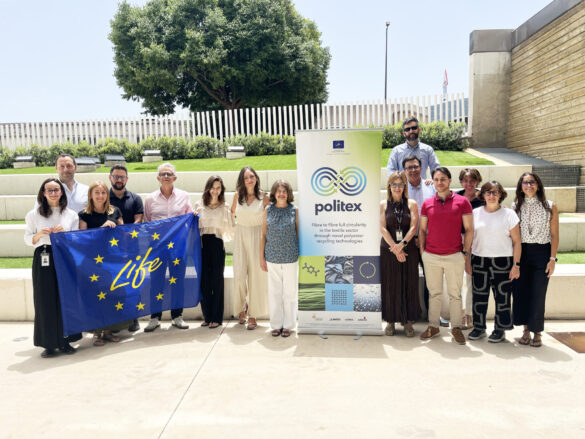
AITEX has hosted the LIFE POLITEX workshop entitled “Closing the textile polyester cycle: challenges and opportunities”, based on promoting sustainable solutions for the management and recycling of textile materials.