

New high-performance functionalised materials
SINGLE AND MULTIFILAMENT SPINNING OF YARNS WITH ELASTIC PROPERTIES FROM THERMOPLASTIC POLYMERS
TPELASTIC
Motivation
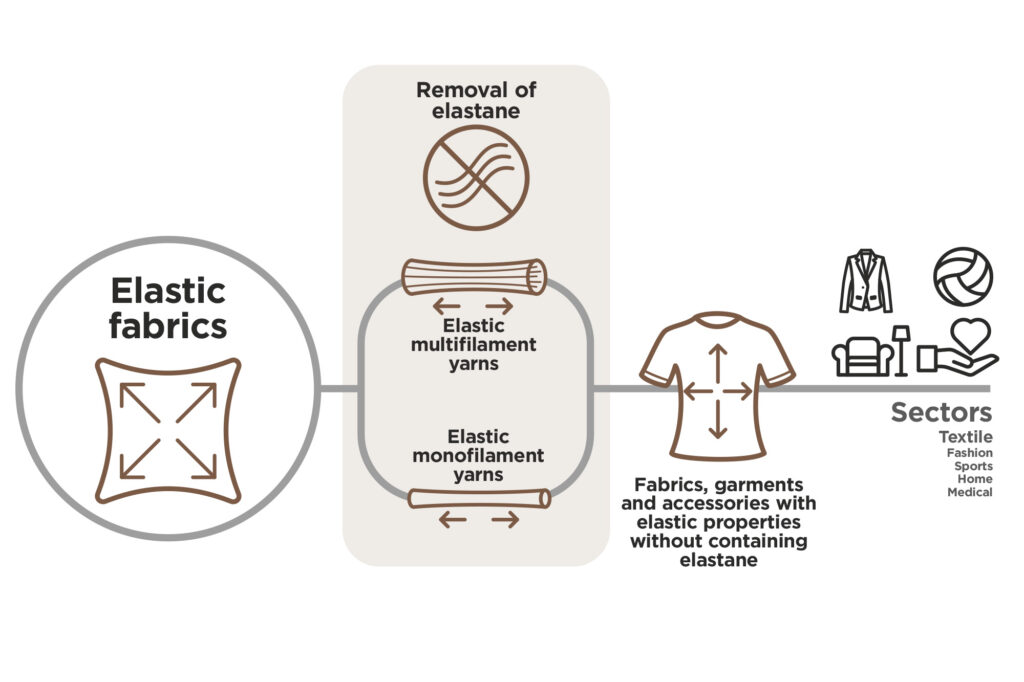
A significant percentage of textiles, in several applications, contain an elastic component that makes them suitable for certain roles: from fashion and sportswear to home textiles and medical fabrics, elastic confers enhanced performance in certain environments. Since its development, the most common is elastane (Lycra), offering excellent elasticity, which is inherently lacking in standard textiles, whether synthetic or natural. An addition of no more than one and three percent into the composition of a fabric greatly enhances its elasticity. However, the nature of elastane inhibits the ability to recycle the fabric, whether due to the difficulty of separating it from natural fibers, the impossibility of reprocessing it alongside synthetic materials, or removing it through chemical routes without damaging the material with which it is combined.
The growing concern for the sustainability of the textile sector and the drive to achieve a circular system in which pollution and environmental damage tends to zero has subjected the entirety of practices, processes, and materials used to exhaustive scrutiny, emphasizing alternatives capable of meeting the same needs while having a lesser impact on the environment.

Objectives
At present, there are no sufficiently mature and effective solutions that offer a viable alternative to elastane and it is in this context that TPELASTIC aims to replace elastane, using available technologies in the yarn production chain such as melt extrusion. This will greatly simplify its introduction and the possibilities for recycling and reuse will be much greater than those offered by elastane. TPELASTIC will have two branches similar in approach, which will involve specific aspects of the processes involved in obtaining elastic yarns and fabrics and respond to the issues presented by different applications.
The overall objective of TPELASTIC is develop and optimise mono and multifilament yarns with elastic properties from thermoplastic polymers by melt extrusion spinning, while considering more environmentally friendly materials such as biopolymers, biodegradable and compostable polymers, to eliminate the need to use elastane to create elasticity.
Value and competitive advantage

-
Replacement of spandex with recyclable thermoplastic materials, improving the sustainability of the final product.
-
Production of elastic yarns using existing industrial processes, facilitating their adoption in the textile sector.
-
Elastic properties equivalent to spandex, without compromising quality or performance in applications such as sportswear.
Expected results

-
Production of elastic monofilament yarns, maintaining their properties after industrial scale-up..
-
Better performance in HYTREL multifilament spinning, without the need for blends.
-
Yarn texturizing (ATY and DTY), preserving their elastic properties.
-
Final fabrics with results similar to spandex, suitable for sportswear.
Grant number: IMDEEA/2024/101
Programme: Grants to CV technology centres for R&D projects in cooperation with the private sector
Period of execution: January 2024 – June 2025
Status: In progress
More information: Amount – 176.040,58 €
Entity: IVAC

This project is supported by the Valencian Regional Government’s Ministry of Innovation, Industry, Trade and Tourism, through IVACE, and is co-financed by the FEDER (European Regional Development Fund) of the European Union, within the FEDER Operational Programme of the Valencian Community 2021-2027.

CONTACT US
Do you want to contact us? Click on the button and write to us.
R&D AREAS

New high-performance functionalised materials

Circular economy and sustainability

Advanced manufacturing, smart textiles and digitalisation

High value-added solutions for strategic markets
RELATED PROJECTS


NEWS
AITEX is present at the Babykid FIMI fair at Feria Valencia from January 26 to 28, presenting tests and certifications for children’s products.

AITEX has attended the Cosmetorium fair in Barcelona once again on October to present its new products for the cosmetic sector.
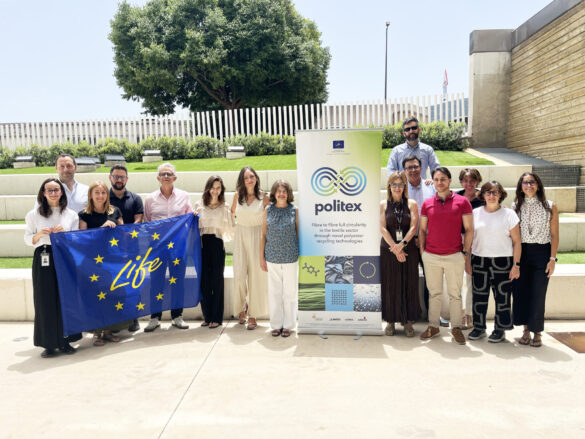
AITEX has hosted the LIFE POLITEX workshop entitled “Closing the textile polyester cycle: challenges and opportunities”, based on promoting sustainable solutions for the management and recycling of textile materials.