COSMETIC
QUALITY
CONTROL
REQUEST MORE INFORMATION
COSMETIC QUALITY CONTROL
REQUEST MORE INFORMATIONCOSMETIC QUALITY CONTROL TO ENSURE PRODUCT SAFETY, STABILITY AND QUALITY
Cosmetic brands need to ensure the safety, stability and quality of their products throughout their entire life cycle. To do so, they carry out tests to verify how formulations behave and ensure compliance with regulatory requirements.
At AITEX, we provide cosmetic quality control services to assess microbiological safety, stability, physicochemical characteristics and packaging-product compatibility. Our analyses make it possible to identify risks, verify the consistency of formulations and support their placing on the market.
WHAT IS COSMETIC QUALITY CONTROL?
Cosmetic quality control is the set of analyses, tests and checks used to verify that a product meets the established safety, stability and quality requirements, from the selection of raw materials and formulation development through to manufacturing and placing on the market.
This process makes it possible to assess aspects such as microbiological quality, physicochemical properties, chemical composition, formulation stability and packaging-product compatibility. It also helps to detect possible contamination, alterations or batch-to-batch deviations, ensuring that the cosmetic product retains its characteristics and remains safe throughout its shelf life.
WHY IS QUALITY CONTROL IMPORTANT FOR COSMETIC PRODUCTS?
The quality of a cosmetic product does not depend solely on its initial formulation. Factors such as microbiological contamination, ingredient degradation, interaction with the packaging and production variations can affect the safety, efficacy and acceptance of the product.
At AITEX, we carry out quality control tailored to each product and objective, in line with European regulations. We combine microbiological testing, chemical analysis and stability studies to provide a comprehensive view of product behaviour. This approach supports decision-making in R&D, Quality and Regulatory Affairs, contributing to the development of safe and reliable cosmetic products.
QUALITY CONTROL OF COSMETIC PRODUCTS
-
Microbiological safety of the product
-
Verification of stability throughout the product’s shelf life
-
Detection of deviations between production batches
-
Compliance with regulatory and market requirements
Microbiological testing
Microbiological safety and preservation of cosmetic products
One of the main challenges for cosmetic formulations is ensuring that the product remains protected against microbial growth during manufacturing, storage and use by the consumer.
At AITEX, we carry out studies to assess the microbiological quality of products, raw materials and facilities, as well as the efficacy of the preservative systems used in the formulation.
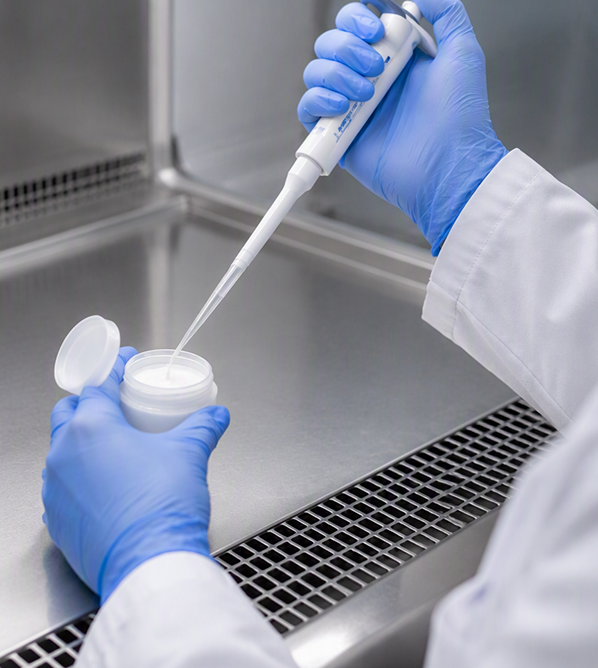
Microbiological control of cosmetic products
This test, performed under ENAC accreditation, verifies microbiological quality and detects potentially pathogenic microorganisms in accordance with ISO standards to ensure safety before the product is placed on the market.
Microbiological control of surfaces and facilities
Microbiological control of surfaces and environments makes it possible to assess hygiene conditions in facilities such as factories, production lines and cleanrooms, ensuring a suitable environment for the manufacture of cosmetic products. At AITEX, these analyses deliver reliable and comparable results.
Challenge Test or preservative efficacy test
The Challenge Test assesses the ability of a cosmetic product’s preservative system to inhibit microbial growth throughout its shelf life. Performed under ENAC accreditation, the test involves the controlled inoculation of representative strains (bacteria, yeasts and moulds) and monitoring their reduction over time, verifying compliance with established criteria (ISO 11930 or others). The study can also be adapted by including additional microorganisms of interest, making it possible to assess specific risks associated with the use, market or type of formulation.
Water activity (Aw)
Assessment of the potential for microbial growth by analysing the amount of free water available in the product. At AITEX, we measure Aw using specific equipment that ensures accuracy and reproducibility, applicable to both finished products and raw materials. This test is particularly relevant for solid, semi-solid or low-water formulations.
Microbiome Friendly
Studies designed to demonstrate that a formulation respects the skin microbiome, assessing its impact on beneficial and potentially pathogenic microorganisms.
In vitro cytotoxicity
The cytotoxicity test assesses the potential toxic effect of a cosmetic product through its interaction with in vitro cell cultures, making it possible to quantify changes in cell viability, proliferation or integrity
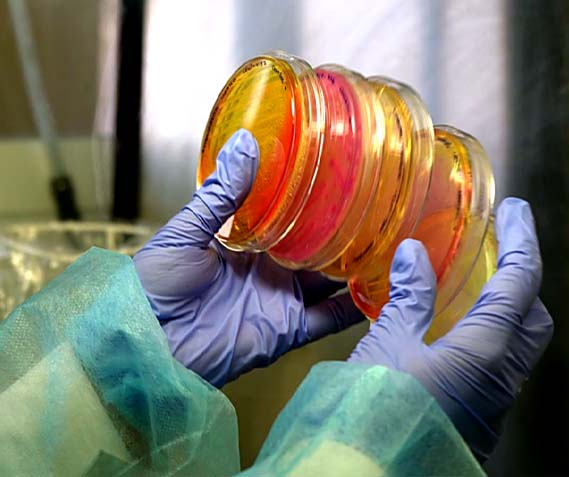
Physical testing
Physicochemical characterisation to ensure product quality
Physicochemical properties have a direct influence on the stability, user experience, processability and behaviour of a cosmetic product. Controlling them ensures the reproducibility of formulations and makes it possible to detect deviations during development and manufacturing.
At AITEX, we carry out physicochemical characterisation tests to obtain objective information on the behaviour of cosmetic products, raw materials and formulation systems, contributing to quality control at every stage of the product life cycle.
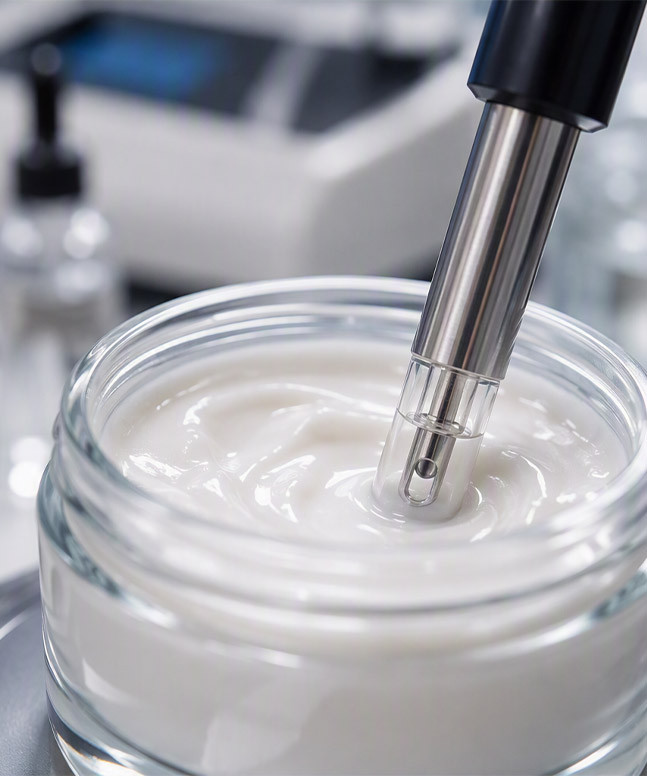
Viscosity
Viscosity measurement assesses the behaviour of a formulation during manufacturing, filling and application. This parameter is essential to ensure the stability, consistency and user experience of the cosmetic product.
Density
Density determination characterises the mass/volume ratio of a cosmetic product and is a key physical parameter in quality control and formulation. The test is performed using techniques such as pycnometry or digital density meters, under controlled temperature conditions given its direct impact on the result.
pH
This is essential to ensure formulation stability, skin compatibility and the efficacy of certain active ingredients and preservative systems.
Conductivity
Conductivity provides information on the ionic composition of aqueous formulations and is useful for monitoring product stability and consistency over time.
Refractive index
This makes it possible to verify the identity, purity and homogeneity of raw materials and cosmetic products. Monitoring it helps to detect variations in composition, possible contamination and differences between production batches.
Thermal characterisation and temperature behaviour
Melting point. Melting point determination characterises the thermal behaviour of ingredients and formulations, contributing to quality control and the optimisation of manufacturing processes.
Drop point. The drop point test assesses the resistance of waxes, balms and anhydrous systems to temperature changes, verifying their stability during storage and use.
Boiling point. Assessing the boiling point is useful for characterising volatile ingredients and analysing their behaviour during manufacturing and storage.
Flash point. The flash point test determines the safety conditions for products containing alcohols or other volatile compounds, facilitating their correct handling, storage and transport.
Particle analysis
Particle size in nanoemulsions and colloidal systems (NanoSizer). This makes it possible to assess the stability and homogeneity of nanoemulsions, liposomes and other advanced formulation systems.
Particle size distribution (MasterSizer). This makes it possible to optimise the texture, stability and appearance of powders, suspensions and emulsions.
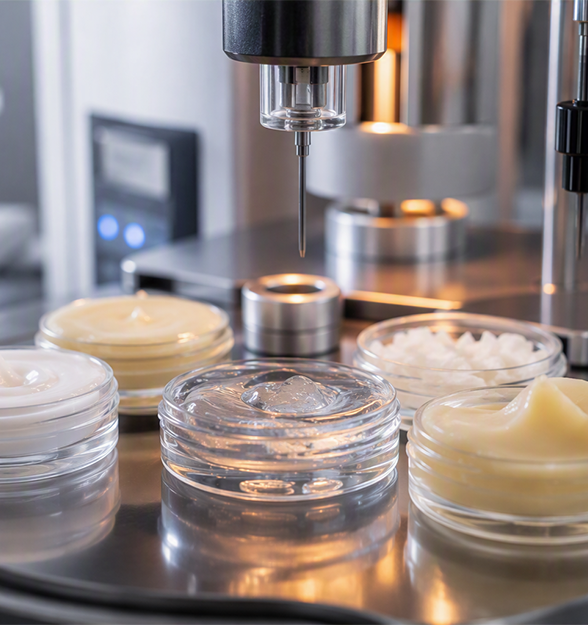
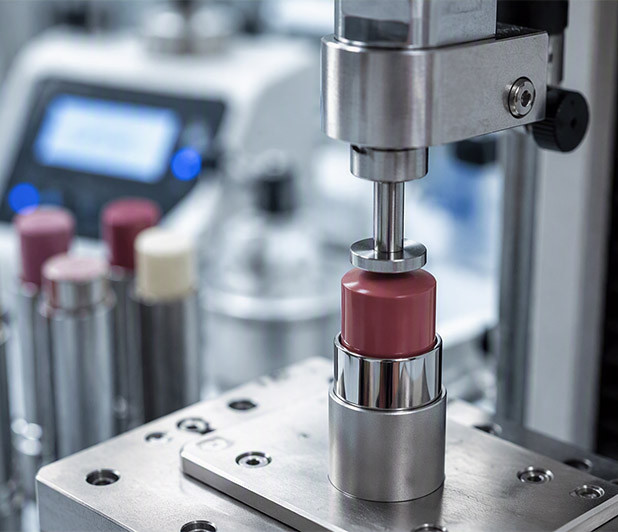
Characterisation and physical testing of cosmetic sticks
Specific tests to assess mechanical strength, compression, bending and structural integrity.
Breaking strength. This assesses the force required to break the stick, verifying its robustness against impacts or localised pressure.
Bending. This analyses the product’s ability to deform without breaking, providing information on its cohesion and structural behaviour.
Compression. This assesses the resistance of the stick to the forces exerted during normal application and handling by the user.
Organoleptic changes
Assessing colour, odour, appearance, homogeneity or phase separation makes it possible to detect possible degradation and verify the physical stability of the formulation over time.
These studies provide key information for establishing the product’s shelf life and ensuring that it retains its initial properties until the end of its commercial life.
Chemical testing
Chemical analysis to ensure safety and regulatory compliance.
The chemical composition of a formulation must be controlled to ensure regulatory compliance, verify the quality of raw materials and detect possible contamination.
Allergen determination
Control of fragrance allergens subject to labelling and regulatory requirements.
Heavy metals and trace elements
Analysis of impurities and contaminants using high-sensitivity techniques.
Analytical determination of compounds of interest in cosmetic formulations
Quantification of components of interest using chromatographic techniques and analytical titrations: hydrogen peroxide, peroxides, acidity, monoethanolamine and ammonia.
Determination of cosmetic ingredients and actives (HPLC)
This makes it possible to identify and quantify actives, preservatives, vitamins, UV filters and impurities in cosmetic products and raw materials. It is a key tool for quality control, stability studies and the verification of cosmetic formulations.
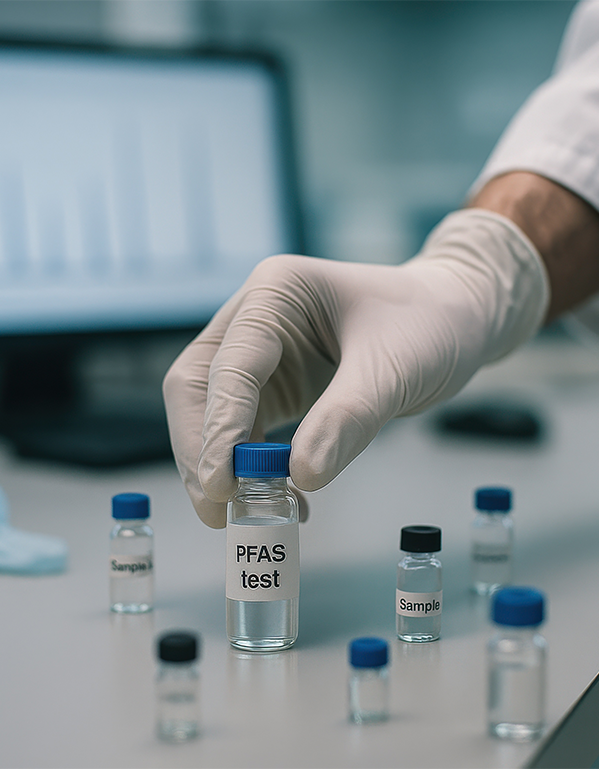
PFAS
PFAS analysis makes it possible to detect and quantify per- and polyfluoroalkyl substances in raw materials and cosmetic products. These fluorinated compounds are the subject of growing regulatory interest due to their high environmental persistence and international restrictions. These studies contribute to the development of safer, more sustainable formulations aligned with the new demands of the industry.
Stability and packaging/product studies
Cosmetic stability studies
and product shelf life
Before a cosmetic product is launched on the market, it must be shown to retain its properties, quality and safety for the intended period of marketing and use. At AITEX, we carry out stability studies tailored to each type of formulation and regulatory strategy.
STABILITY STUDIES
Packaging is an essential part of the cosmetic system and can directly influence the quality, stability and safety of the formulation. Packaging-product compatibility studies make it possible to identify possible interactions between the two before the product is placed on the market.
Accelerated stability
Early detection of possible degradation phenomena such as colour changes, loss of viscosity, phase separation or degradation of actives, making it a key tool in the early stages of development.
Climatic chamber stability
Assessment of product behaviour under different temperature and humidity conditions. This test makes it possible to assess how the product responds to combined environmental factors
Climatic chamber stability with temperature cycling
Simulation of extreme transport and storage conditions, subjecting products to temperature cycles ranging from freezing conditions (below 0 °C) to high temperatures of 60–70 °C.
Accelerated physical stability
Prediction of the long-term physical behaviour of the formulation.
PAO and shelf life determination
Generation of evidence to establish shelf life and period after opening.
PACKAGING-PRODUCT COMPATIBILITY
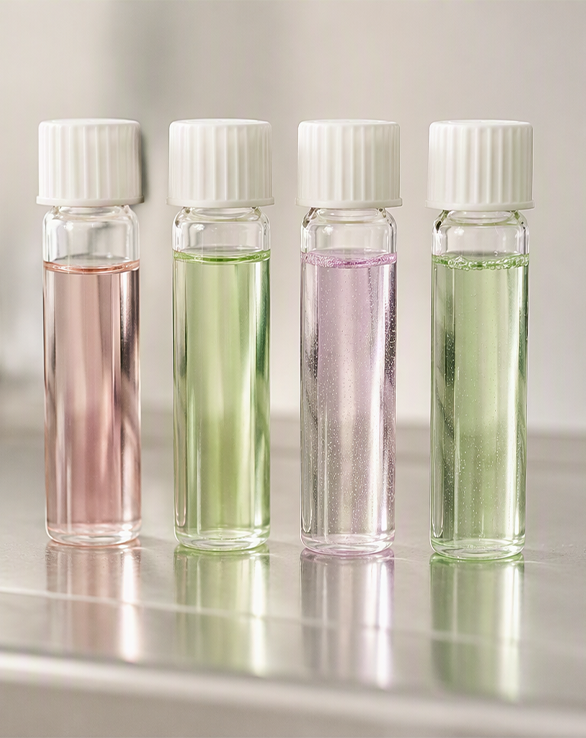
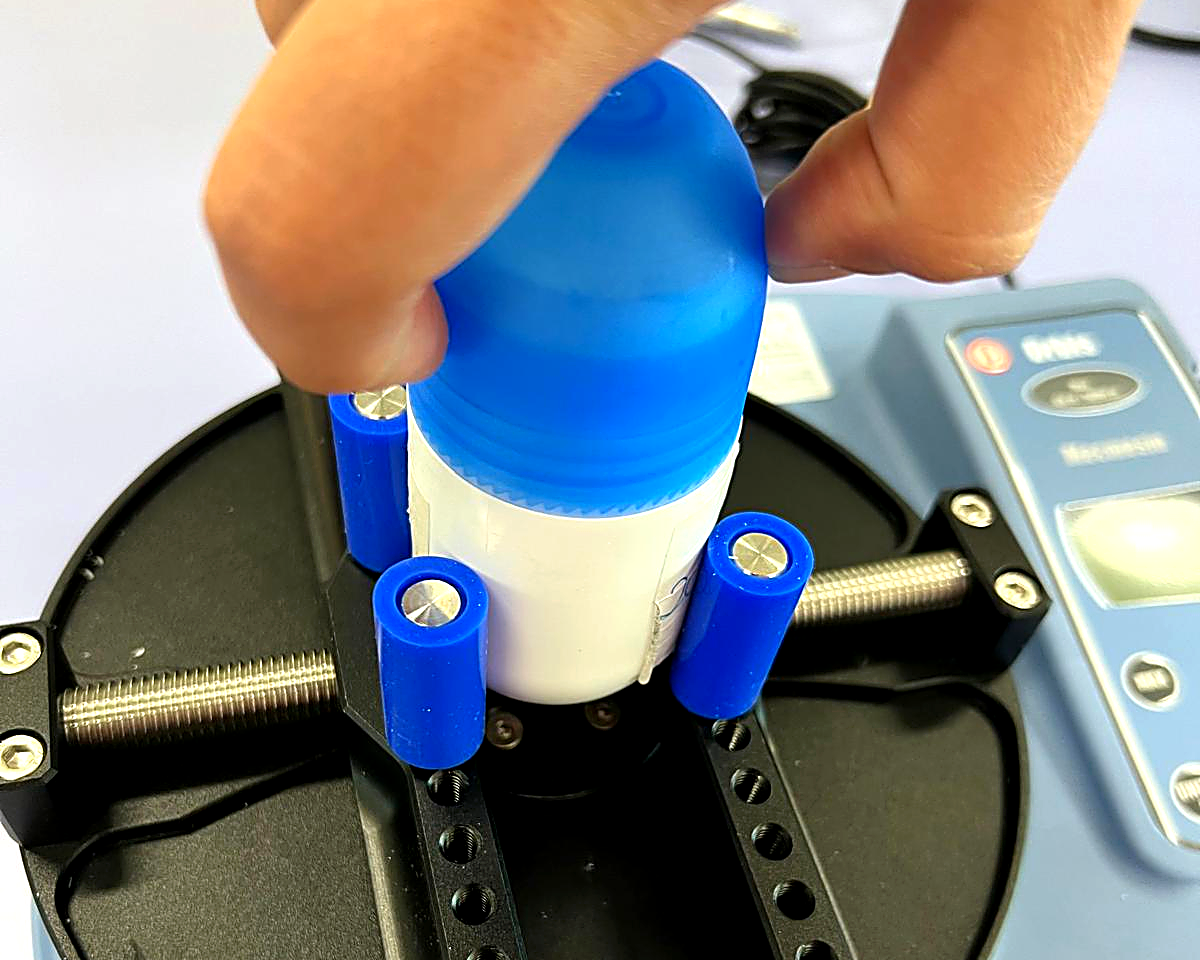
Packaging is an essential part of the cosmetic system and can directly influence the quality, stability and safety of the formulation. Packaging-product compatibility studies make it possible to identify possible interactions between the two before the product is placed on the market.
Compatibility
Assessment of the interaction between the formulation and the packaging material to verify the stability of the whole system over the intended shelf life and rule out possible migration, adsorption, degradation or organoleptic changes.
Overall migration
Determination of the total amount of substances that may transfer from the material or packaging to the product.
Specific migration
Determination of specific compounds with specific migration limits (SML) set by current regulations.
TECHNIQUES AND METHODOLOGIES FOR COSMETIC QUALITY CONTROL
Analytical technologies to ensure the quality and safety of cosmetic products
At AITEX, we combine advanced technologies for microbiological analysis, physicochemical characterisation, instrumental chemical analysis and stability assessment to obtain objective information on the quality and behaviour of cosmetic formulations throughout their life cycle. These methodologies make it possible to detect potential risks, anticipate stability issues, verify compliance with regulatory requirements and generate technical evidence for decision-making in R&D, Quality and Regulatory Affairs.
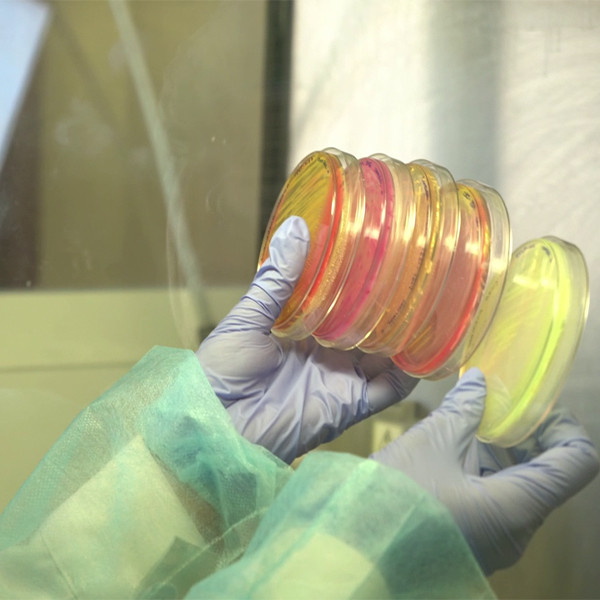
Microbiological safety and preservation
Assessment of product microbiological quality, preservative system efficacy and manufacturing hygiene conditions. This makes it possible to detect contamination, validate preservation strategies and ensure the microbiological protection of the cosmetic product throughout its shelf life.
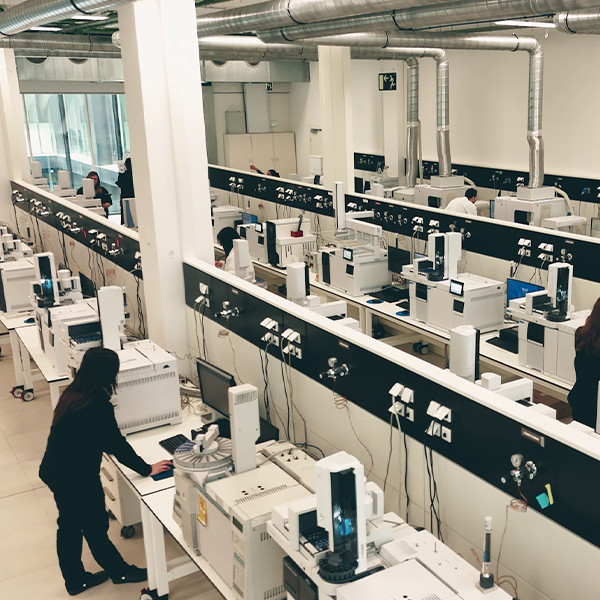
Chemical composition and contaminant control
Analysis of ingredients, impurities, trace metals, allergens, PFAS and other compounds of regulatory interest. These studies make it possible to verify the quality of raw materials and finished products, control possible contamination and support regulatory compliance.
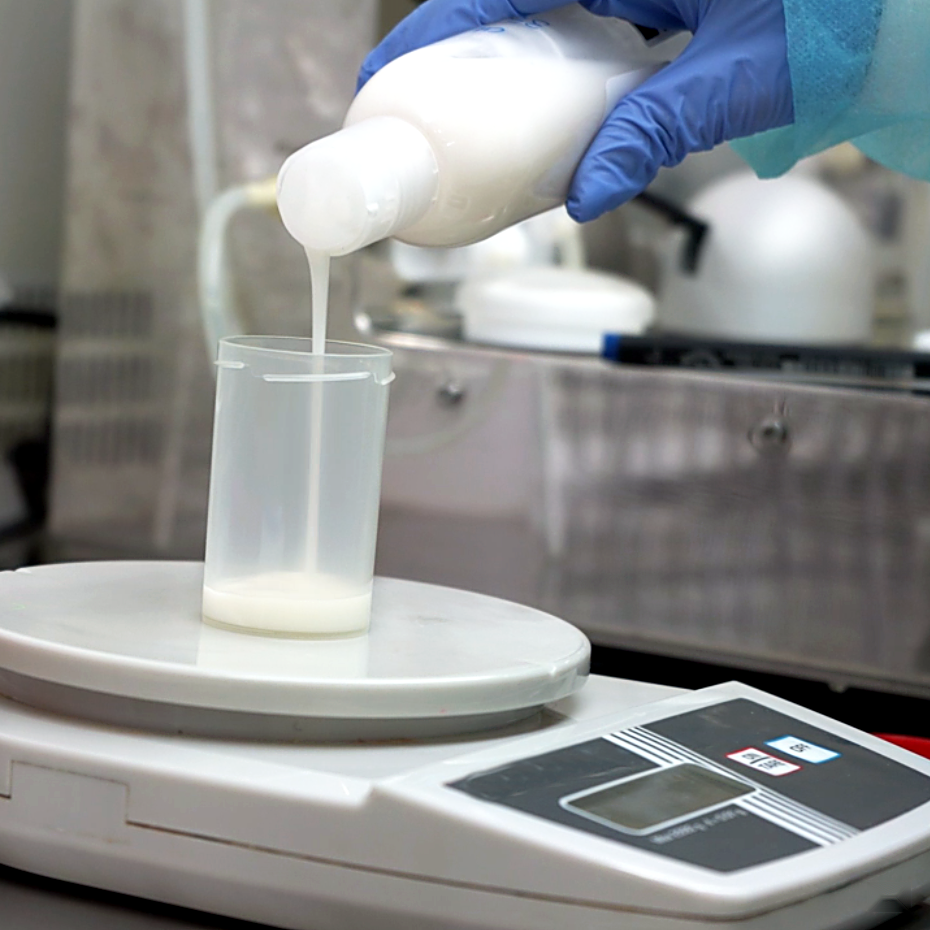
Physical characterisation and product behaviour
Analysis of texture, viscosity, particle size, mechanical properties and other physicochemical parameters that influence quality and user experience. The results make it possible to ensure the reproducibility of formulations and detect batch-to-batch deviations.
REQUEST MORE
INFORMATION
If you would like further information, please complete and submit the form and we will get in touch with you