
CAN YOUR
TENT WITHSTAND
REAL RAIN?
MORE INFORMATION
before launching your product
onto the market
WE SIMULATE REAL HEAVY RAIN CONDITIONS TO DETECT FAILURES BEFORE PRODUCTS REACH THE MARKET
Many camping tents meet technical requirements on paper but fail when exposed to real rainfall. Poorly sealed seams, weak joints or design flaws can lead to water ingress, compromising the end-user experience and resulting in claims, returns and loss of product confidence.
Our artificial rain test evaluates the fully assembled tent, analysing its overall performance — not just the fabric — to validate its waterproofness, comfort and reliability under demanding conditions of use.

WHY IS THIS TEST CRITICAL FOR YOUR PRODUCT?
The artificial rain test is a strategic tool for tent manufacturers, as it enables validation of real product performance before market launch and supports technical decision-making based on real data. With this test, you can:
> Detect failures prior to production or commercialisation
> Compare prototypes and construction solutions
> Strengthen quality control processes
> Optimise product design
> Increase confidence among clients and distributors
The result: more reliable products, reduced risk of incidents and an improved user experience.
REAL VALIDATION OF THE COMPLETE PRODUCT, NOT JUST THE MATERIAL
WHAT DOES THE ARTIFICIAL RAIN TEST INVOLVE?
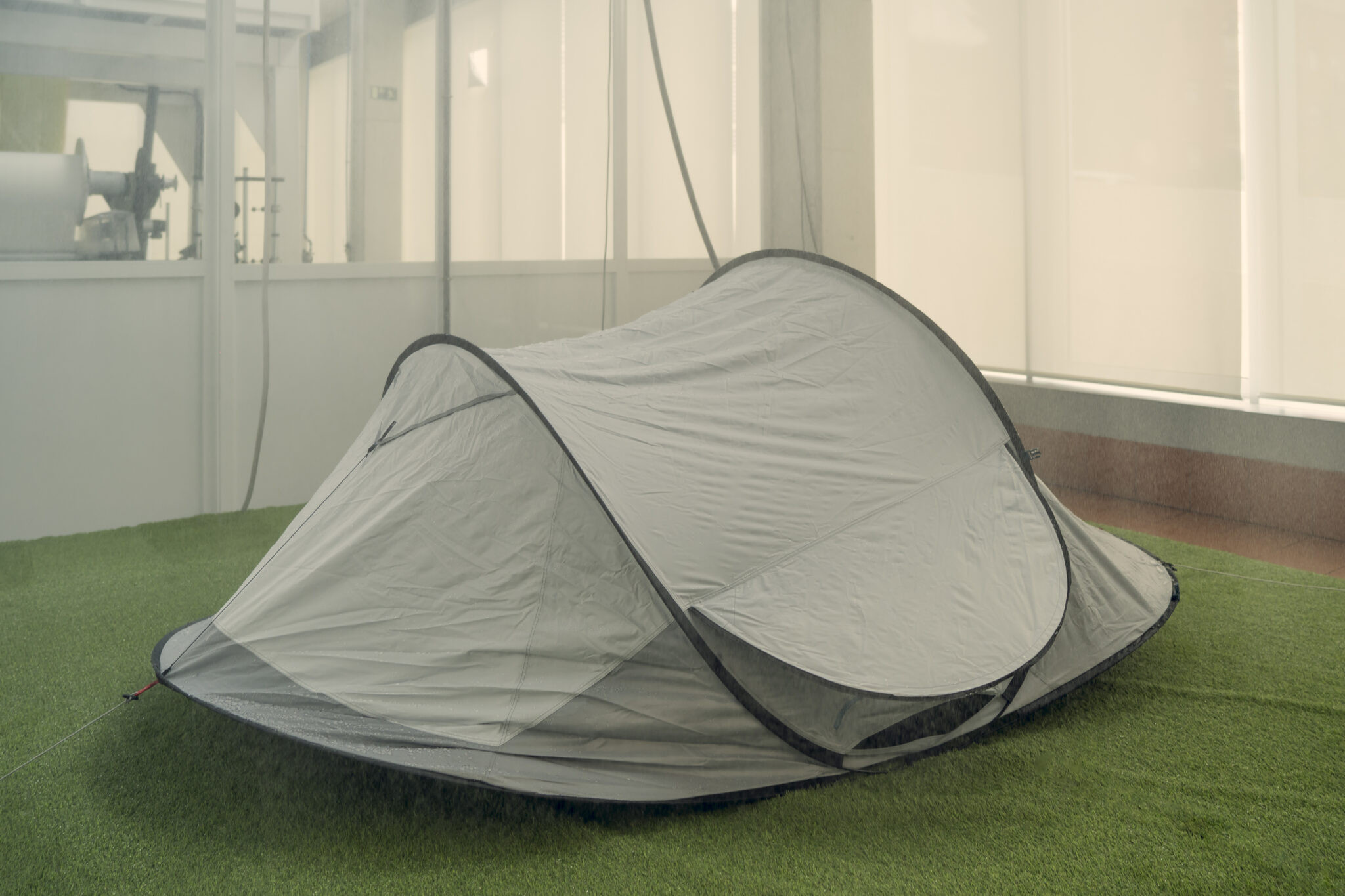
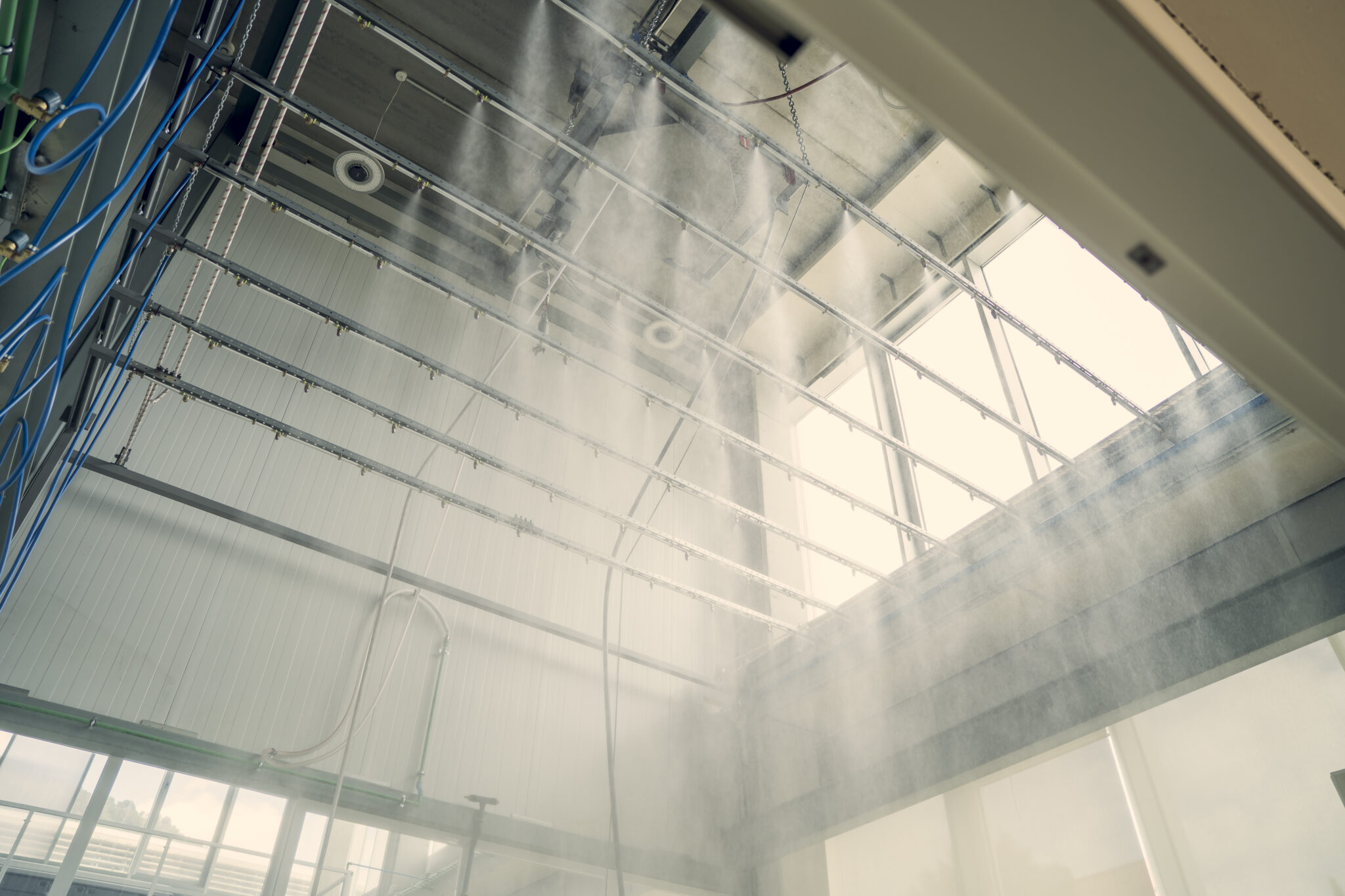
The tent is assembled in accordance with the manufacturer’s instructions and subjected to continuous, controlled rainfall using a sprinkler system that reproduces real conditions of use.
This test allows detection of issues that do not appear in conventional laboratory tests by evaluating product performance under actual conditions, including prolonged and direct water exposure.
Test intensity and duration are defined according to ISO 5912 or client-specific requirements
KEY FACTORS ASSESSED
Where do tents actually fail?
The test analyses the entire tent as used by the end user, with particular focus on critical design and manufacturing points. This approach allows the identification of weaknesses that may not be revealed when testing fabric samples alone. Critical areas assessed include:
> Effective waterproofness of the fabric and coatings
> Seam sealing performance
> Behaviour of zips and zip covers
> Connections between different product components
> Design of overlaps, flaps and structural elements
> Critical areas such as windows, ventilation openings and groundsheet
The full system is evaluated to identify real design and manufacturing weaknesses.
VALIDATING WATERPROOF
PERFORMANCE UNDER
REAL CONDITIONS
WHAT RISKS DOES THIS TEST HELP PREVENT?
During testing, the interior of the tent is inspected to verify the absence of:
> Visible dripping or leakage
> Moisture in inner fabrics
> Water ingress through seams, zips, roof-wall joints, windows, vents or groundsheet
> Failures in critical design areas


HOW IS A TENT VERIFIED AS FIT FOR USE?
A tent is considered compliant when:
> No visible leakage or dripping is detected
> No water accumulation occurs inside
> Seams remain dry
> The groundsheet acts as an effective moisture barrier
> Waterproof performance is maintained throughout the test
REQUEST AN
ASSESSMENT OF THE
CAMPING TENT
If you would like further information, please complete and submit the form, and we will get in touch with you